
BREEAM and interior fit-out: material origin
- Offices
- Amsterdam - NL
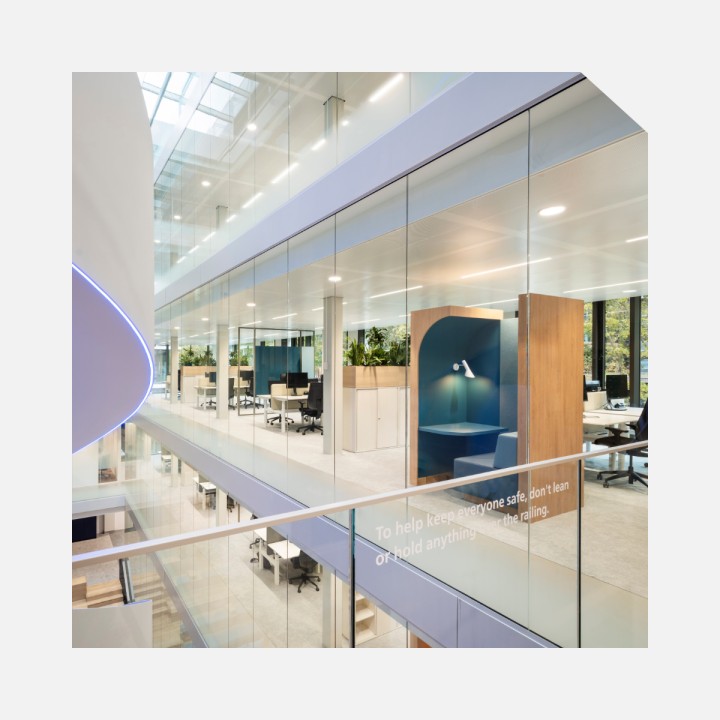
At Keijsers we see a recurring pattern. An interior is finished, looks good, and works exactly as intended. Only then comes the question: where does the material come from, what emissions does it release, how easily can it be taken apart, and what evidence is on file? Answering those questions takes time, and that time runs out if the answer is only sought at handover. That is why we build them in from the first material choice.
What is BREEAM?
BREEAM is an international assessment method for sustainability in the built environment. BREEAM-NL, the Dutch national scheme, assesses new build, renovation and existing buildings across nine categories: management, health, energy, transport, water, materials, waste, land use and ecology, and pollution. Each category is broken down into credits, smaller assessment points with their own score. Every credit specifies exactly what evidence is required: not just what you used, but how you prove it.
Why does BREEAM matter to us as an interior contractor?
A custom reception desk or cabinet wall that we produce is a combination of board material, veneer, lacquer, adhesive, fixings, transport and packaging. Each of those elements falls under one of the credits above. That means that during preparation we look not only at form and function, but also at what evidence each material brings with it, and whether that evidence actually materialises.
Material origin: why 'beautiful' isn't enough
Credit MAT 03 covers responsible sourcing of construction materials: can you prove where the timber or board material came from, for example through FSC or PEFC certification. A supplier delivering certified material doesn't automatically settle the matter. The certificate number, the supplier, the batch and the product information all have to match exactly what was actually processed on our premises. In practice this means we lay delivery notes, invoices and certificates side by side for every project to check that everything adds up, before anything leaves the factory.
Environmental impact: what do we look at when choosing materials?
Credit MAT 01 looks at the environmental impact of materials across the building's full life cycle, from production to demolition. For larger or recurring interior elements, BREEAM assessors increasingly ask us for an Environmental Product Declaration (EPD): a standardised document that substantiates a product's environmental impact with figures. Not every custom-made component automatically has its own EPD available. That means research work upfront: what product data exists, what is missing, and which material is therefore practically viable within the project.
How does our finishing affect indoor air quality?
Credit HEA 04 covers indoor air quality: how many harmful substances finishing materials release into the indoor air, with particular attention to formaldehyde and volatile organic compounds (VOCs). The adhesives, lacquers, paints and board materials we process all count toward this. For each of those materials an emission value or test report has to be available, and it has to meet the standard that applies to the project. This weighs heavily in offices, healthcare buildings, hotels and educational environments, where people spend intensive, extended time in the space.
How do we make interiors demountable?
Credit MAT 07 covers demountability: can building components be disassembled at the end of their service life and reused elsewhere, rather than demolished. A piece of furniture that is fully bonded to the building's core is difficult to remove without damage. That's why, wherever possible, we choose mechanical connections, such as screw fixings and demountable panels, over adhesive bonding. Utility projects also require a material passport: an overview per component of material, weight and manufacturer, which is incorporated into the building passport. That passport has to be accurate down to the level of individual panels, which means keeping it up to date runs alongside the entire production process.
How do we limit waste on site?
Credit WST 01 assesses how carefully waste is separated and reused on the construction site. That care doesn't actually start on site, though. It starts with choices made earlier: dimensioning, packaging, prefabrication and assembly sequence. Prefabrication in our factory reduces off-cuts on site, flat-pack logistics make transport more efficient, and reusable transport equipment cuts down on disposable packaging. Every choice made earlier in that chain ultimately reduces what ends up as waste on site.
What do we often see go wrong?
Most BREEAM risks in interior fit-out don't come from unwillingness, but from timing. A material gets chosen for its look and its budget, production starts, and only at installation does the question of certificates or emission reports come up. At that point it can turn out that a certificate doesn't hold at project level, or that data is simply missing. An alternative is then needed, which can delay the schedule and sometimes the budget. That's why we raise those questions well before installation, starting at the first material choice, together with the architect, contractor and BREEAM assessor.
How do we approach this?
In practice this calls for precise, recurring work throughout the whole process: checking material choices against certification before production starts, recording origin per supplier and certificate, gathering emission data for every adhesive, lacquer and board, building mechanical connections into the engineering drawings, and aligning installation and packaging with a clean site. None of these steps is complicated on its own. The challenge lies in keeping track of hundreds of components at once, and in maintaining that discipline throughout the whole project, not just at the start.
In short
BREEAM doesn't start with the certification file. It starts with the first material choice in the factory. Material origin, environmental impact, indoor air quality, demountability and waste management all belong to our trade as an interior contractor. It is precise work: many small, verifiable steps that together determine whether a certification file holds up. By taking those steps early and consistently, a BREEAM project stays manageable, instead of turning into a race against the clock at handover.
Keijsers Interiors - Identity.Built
Bij Keijsers zien we een terugkerend patroon. Een interieur is af, ziet er goed uit en functioneert zoals bedoeld. Pas dan komt de vraag: waar komt het materiaal vandaan, welke emissies geeft het af, hoe losmaakbaar is het en welk bewijs ligt er klaar? Die vragen beantwoorden kost tijd, en die tijd is er niet meer als het antwoord pas bij oplevering wordt gezocht. Daarom nemen wij ze mee vanaf de eerste materiaalkeuze.
Wat is BREEAM?
BREEAM is een internationale beoordelingsmethode voor duurzaamheid in de gebouwde omgeving. BREEAM-NL toetst nieuwbouw, renovatie en bestaande gebouwen op negen categorieën: management, gezondheid, energie, transport, water, materialen, afval, landgebruik en ecologie, en vervuiling. Elke categorie is opgedeeld in credits, kleinere toetspunten met een eigen puntentotaal. Per credit staat vastgelegd welk bewijsmateriaal nodig is: niet alleen wát je hebt gebruikt, maar ook waarmee je dat aantoont.
Waarom raakt BREEAM ons vak als interieurbouwer?
Een maatwerkbalie of kastenwand die wij produceren is een samenstelling van plaatmateriaal, fineer, lak, lijm, bevestigingsmiddelen, transport en verpakking. Elk van die onderdelen valt onder een van de credits hierboven. Dat betekent dat wij in de werkvoorbereiding niet alleen kijken naar vorm en functie, maar ook naar welk bewijs elk materiaal met zich meebrengt, en of dat bewijs er daadwerkelijk komt.
Materiaalherkomst: waarom is ‘mooi’ niet genoeg?
Credit MAT 03 gaat over verantwoorde herkomst van bouwmaterialen: kun je aantonen waar het hout of plaatmateriaal vandaan komt, bijvoorbeeld via een FSC- of PEFC-certificering. Een leverancier die gecertificeerd materiaal levert is daarmee niet automatisch klaar. Het certificaatnummer, de leverancier, de batch en de productinformatie moeten precies overeenkomen met wat er daadwerkelijk in ons pand is verwerkt. In de praktijk betekent dit dat wij per project pakbonnen, facturen en certificaten naast elkaar leggen om te controleren of alles sluitend is, voordat er iets de fabriek uit gaat.
Milieubelasting: waar letten wij op bij materiaalkeuze?
Credit MAT 01 kijkt naar de milieu-impact van materialen over de hele levensduur van het gebouw, van productie tot sloop. Bij grotere of terugkerende interieurelementen vragen BREEAM-experts hiervoor vaak om een Environmental Product Declaration (EPD): een gestandaardiseerd document dat de milieu-impact van een product onderbouwt met cijfers. Niet elk maatwerkonderdeel heeft automatisch een eigen EPD beschikbaar. Dat betekent uitzoekwerk vooraf: welke productdata is er wel, welke ontbreekt, en welk materiaal is daardoor praktisch haalbaar binnen het project.
Hoe beïnvloedt onze afwerking de binnenluchtkwaliteit?
Credit HEA 04 gaat over interne luchtkwaliteit: hoeveel schadelijke stoffen afwerkingsmaterialen afgeven aan de binnenlucht, met specifieke aandacht voor formaldehyde en vluchtige organische stoffen (VOS). De lijmen, lakken, verven en plaatmaterialen die wij verwerken tellen hierin mee. Voor elk van die materialen moet een emissiewaarde of testrapport beschikbaar zijn, en dat moet passen bij de norm die voor het project geldt. Dit weegt zwaar in kantoren, zorggebouwen, hotels en onderwijsomgevingen, waar mensen intensief en langdurig in de ruimte verblijven.
Hoe maken wij interieurs losmaakbaar?
Credit MAT 07 gaat over losmaakbaarheid: kunnen bouwdelen aan het einde van hun levensduur worden gedemonteerd en elders hergebruikt, in plaats van gesloopt. Een meubel dat volledig met het casco is verlijmd, laat zich moeilijk verwijderen zonder schade. Daarom kiezen wij waar mogelijk voor mechanische verbindingen, zoals schroefverbindingen en demontabele panelen, in plaats van lijmverbindingen. Bij utiliteitsprojecten hoort hier ook een materiaalpaspoort bij: een overzicht per onderdeel van materiaal, gewicht en fabrikant, dat wordt opgenomen in het gebouwpaspoort. Dat paspoort moet kloppen tot op het niveau van individuele panelen, wat betekent dat het bijhouden ervan meeloopt door het hele productieproces.
Hoe beperken wij afval op de bouwplaats?
Credit WST 01 beoordeelt hoe zorgvuldig afval wordt gescheiden en hergebruikt op de bouwplaats. Die zorgvuldigheid begint echter niet op de bouwplaats zelf, maar in keuzes die daarvoor al zijn gemaakt: maatvoering, verpakking, prefabricage en montagevolgorde. Prefabricage in onze fabriek beperkt zaagverlies op locatie, flatpack-logistiek maakt transport efficiënter, en herbruikbare transportmiddelen verminderen wegwerpverpakking. Elke keuze in die keten scheelt uiteindelijk in wat er op de bouwplaats als afval terechtkomt.
Wat zien wij vaak misgaan?
De meeste BREEAM-risico's in interieurbouw ontstaan niet door onwil, maar door timing. Een materiaal wordt gekozen op uitstraling en budget, de productie start, en pas bij montage komt de vraag naar certificaten of emissierapporten. Op dat moment blijkt soms dat een certificaat niet op projectniveau klopt, of dat gegevens simpelweg ontbreken. Dan is een alternatief nodig, met vertraging in planning en soms in budget tot gevolg. Daarom leggen wij die vragen niet pas bij montage neer, maar al bij de eerste materiaalkeuze, samen met architect, aannemer en BREEAM-expert.
Hoe pakken wij dit aan?
Concreet vraagt dit om nauwkeurig, terugkerend werk door het hele proces heen: materiaalkeuzes toetsen op certificering vóórdat de productie start, herkomst vastleggen per leverancier en certificaat, emissiegegevens verzamelen bij elke lijm, lak en plaat, mechanische verbindingen meenemen in de engineeringtekening, en montage en verpakking afstemmen op een schone bouwplaats. Geen van deze stappen is op zichzelf ingewikkeld. De uitdaging zit in het overzicht houden over honderden onderdelen tegelijk, en in het vasthouden van die discipline gedurende het hele project, niet alleen aan het begin.
Kort samengevat
BREEAM begint niet bij het certificeringsdossier, maar bij de eerste materiaalkeuze in de fabriek. Materiaalherkomst, milieubelasting, binnenluchtkwaliteit, losmaakbaarheid en afvalmanagement raken allemaal ons vak als interieurbouwer. Het is precies werk: veel kleine, controleerbare stappen die samen bepalen of een certificeringsdossier standhoudt. Door die stappen vroeg en consistent te zetten, blijft een BREEAM-traject beheersbaar in plaats van een race tegen de klok bij oplevering.
Keijsers Interiors - Identity.Built


